





What You'll Learn in This Guide:
- How to assess your garage space and storage needs
- Different types of overhead storage solutions and their benefits
- Budget considerations for various storage systems
- Weight capacity requirements and safety considerations
- DIY vs. professional installation options
- How to maximize your garage's vertical space effectively
Key Takeaways:
| Storage Type | Best For | Price Range | Weight Capacity |
| Fixed Ceiling Racks | Seasonal items, infrequently accessed storage | $250-$500 | 300-800 lbs |
| Motorized Lift Systems | Frequently accessed items, users with mobility concerns | $975-$3,000+ | 150-600 lbs |
| Attic Ladders | Expanding storage into the existing attic space | $500-$5,000+ | 275-570 lbs (ladder capacity) |
| Specialized Hoists | Bicycles, kayaks, sports equipment | $100-$1,000 | 100-200 lbs |

Are you tired of tripping over holiday decorations, sports equipment, and rarely used items in your garage? Looking up might be the solution you need. Making the most of your garage space often means using the overhead areas that many people forget about.
With the right overhead storage system, you can transform your messy garage into an organized space where everything has its place. Whether you want to store Christmas decorations, camping gear, or just make room to park your car, overhead storage uses space that would otherwise be wasted. Many homeowners find that good overhead storage can free up about 30% of their garage space, making the garage less stressful to use.
Before we discuss specific products, let's examine the key factors to consider when selecting overhead storage. From measuring your space to understanding how much weight your ceiling can hold, this guide covers everything you need to know to make a smart choice. Garage experts agree that overhead storage is one of the best ways to maximize your garage's usefulness while keeping the floor clear for cars and activities.
1. Assessing Your Garage Space and Storage Needs

Before you buy any overhead storage system, you need to check your garage's size and figure out what you need to store. This first step will guide all your other decisions and help you avoid wasting money. Taking time to measure your space properly can save you hundreds of dollars in returns or fixes later.
Start by measuring how high your garage ceiling is. Most normal home garages have ceilings between 8 and 10 feet high, but this can vary a lot. You need to make sure that after installing overhead storage, you still have enough room for your cars and to move around comfortably. A good rule is to keep at least 7 feet of space from the floor to the bottom of your storage system. Building codes in most places require 7 feet as the minimum ceiling height for usable spaces, so this is a good target to make sure your garage stays comfortable and useful.
Next, look at your ceiling's structure. Find exposed beams or trusses that you can attach things to. If your ceiling is covered with drywall, you'll need to find the beams behind it using a stud finder. The space between beams (usually 16 or 24 inches apart) will affect which storage systems will work best in your garage. Understanding your ceiling's construction is really important for safety - experts recommend that overhead storage should always be attached directly to the strong support beams, not just to drywall or other weak materials.
Make a list of the things you plan to store overhead. Seasonal items, holiday decorations, camping gear, and suitcases are perfect for overhead storage since you don't use them often. Think about both the weight and size of these items to pick the right storage solution. Heavier items will need a stronger storage system, while bulkier items need more space. Organizers suggest making a detailed list with estimated weights and sizes of everything you plan to store overhead, which can help you calculate your total storage needs more accurately and pick the right system from the start.
How often will you need to get the stored items? This really affects what type of system you should choose. For items you only use once or twice a year (like Christmas decorations), fixed overhead racks might be perfect. For items you need monthly, think about motorized lifts or pull-down systems that make access easier. Research shows that people often underestimate how often they'll need to get to their stored items - if you'll need things more than 3-4 times per year, investing in a system with easier access can make you much happier with your storage solution in the long run.
2. Understanding Different Types of Overhead Storage Systems


There are several types of overhead storage options, each with its own benefits and best uses. Understanding these choices will help you make a good decision that fits your specific needs. Storage experts say that the right system for your garage depends on what you need to store, your budget, and how often you'll need to get to your stored items.
Fixed ceiling-mounted racks are the most common and usually cheapest overhead storage option. These strong platforms attach directly to your ceiling beams and provide a stable surface for storage bins and containers. They're best for items you don't need to use often, since you'll need a ladder to get things down. Home improvement experts say that fixed racks give you the most storage space for your money compared to other overhead storage options.
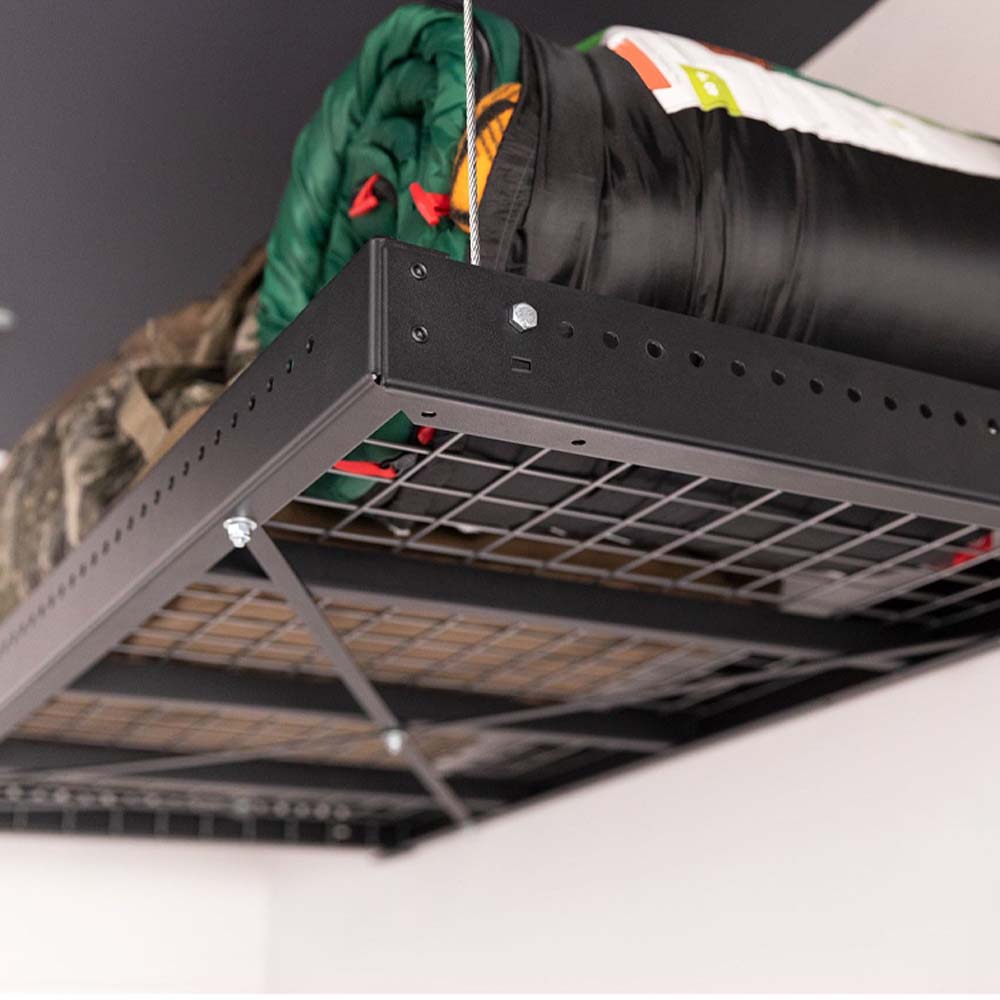
ONRAX Ceiling Storage Racks are a great example of high-quality fixed overhead storage. Made from strong 14-gauge steel, these racks can hold up to 800 pounds, making them perfect for serious storage needs. They come in multiple sizes to fit different garage layouts. Tests show that the welded steel construction of ONRAX racks provides better strength and durability compared to many competing products that use bolted connections, which can come loose over time due to vibration and temperature changes.
For heavier items or things you need to use more often, motorized lift systems provide an excellent solution. These systems use electric motors to raise and lower your storage platform, so you don't need ladders and can easily access your stored items. Health experts point out that motorized systems greatly reduce the risk of injury from climbing ladders while carrying things, making them especially valuable for older people or those who have trouble moving around.
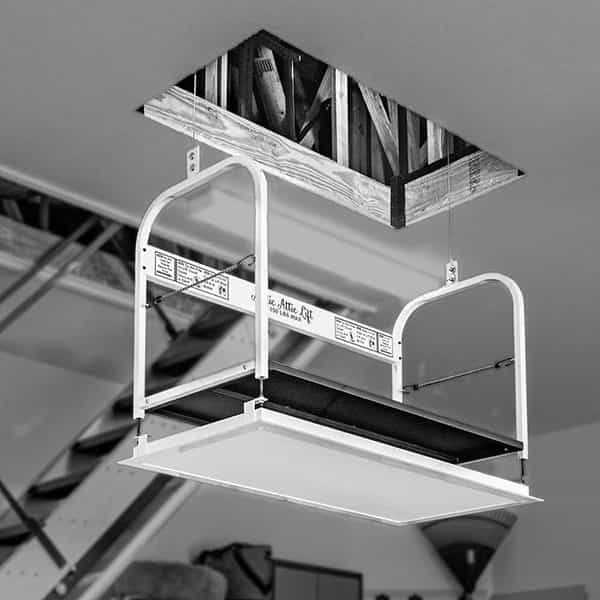
The Majic Attic Lift System is a premium option that can change how you use your overhead space. With its motorized operation, you can access stored items just by pressing a button. This system can carry up to 150 lbs and is perfect for users who need regular access to their stored items or those who have mobility concerns. The Majic system has multiple safety features, including automatic stop sensors and backup manual controls, giving peace of mind to homeowners worried about the reliability of motorized equipment.
If your garage has attic space above it, installing a proper access system can greatly increase your storage options. Attic ladders and stairs provide safe and easy access to this valuable storage area. Home design experts estimate that using existing attic space can double or even triple your available storage capacity without requiring any additional square footage, making it one of the most cost-effective storage expansion options available.
The FAKRO LMP Insulated Attic Ladder is designed specifically for high ceilings and offers excellent thermal efficiency to prevent energy loss between your garage and attic space. This is particularly important if your garage shares walls with your living space or if you live in an area with extreme temperatures. Energy efficiency studies show that uninsulated attic access points can account for up to 15% of a home's heat loss in winter months, making insulated options like the FAKRO ladder a smart investment that can pay for itself over time through energy savings.
For a more unique solution, the Rainbow Wall Access Attic Ladder provides wall-mounted access rather than ceiling access, which can be ideal for certain garage configurations where ceiling space is limited or where you want to maximize overhead storage without interruption. This innovative design is particularly valuable in garages with complex ceiling structures or where you want to maintain continuous overhead storage racks while still providing convenient attic access.
3. Weight Capacity Considerations
One of the most critical factors in selecting the right overhead storage system is understanding weight capacity requirements. Overloading your storage system can lead to dangerous failures and potential damage to both your belongings and your garage structure. According to structural engineers, weight capacity is the single most important safety consideration when installing overhead storage, yet it's frequently overlooked by homeowners eager to maximize their storage space.
Different storage systems come with varying weight capacities that are designed for specific types of items. Light-duty systems typically support between 150-250 lbs and are suitable for plastic bins with clothing, holiday decorations, and other lightweight items. These systems are often cheaper but have limitations on what they can safely hold. Materials experts note that light-duty systems usually use thinner metals or composite materials that offer adequate strength for their intended purpose while keeping costs down.
Medium-duty systems generally handle between 300-500 lbs and are good for a mix of storage bins, luggage, and some sporting equipment. These represent a good middle ground for most homeowners who need to store a variety of items of moderate weight. Engineering analyses show that medium-duty systems typically have reinforced connection points and thicker gauge materials at critical stress points, providing a significant increase in load-bearing capacity compared to light-duty options.
Heavy-duty systems, like the ONRAX Ceiling Storage Rack, can support between 600-800+ lbs and are designed for serious storage needs, including heavy equipment, multiple large storage bins, and bulkier items. The ONRAX system stands out with its impressive 800-pound weight capacity, making it one of the strongest fixed overhead storage options available. This exceptional capacity is achieved through a combination of 14-gauge steel construction, reinforced welded joints, and a grid design that distributes weight evenly across multiple ceiling attachment points.
Even with high-capacity systems, proper weight distribution is essential for safety. Always distribute weight evenly across the entire platform, placing heavier items toward the center rather than the edges. Also, consider the weight of the storage containers themselves when calculating the total load. Most importantly, never exceed the manufacturer's recommended weight limit, even if the system seems capable of handling more. Structural engineers caution that exceeding rated capacities can lead to progressive weakening of the system over time, potentially resulting in catastrophic failure even years after installation if weight limits are consistently ignored.
4. Installation Considerations: DIY vs. Professional
The installation process varies significantly between different overhead storage systems. Understanding your own DIY capabilities and the complexity of each system will help you determine whether professional installation is necessary. According to surveys of homeowners who have installed overhead storage, approximately 65% complete fixed rack installations themselves, while only about 20% attempt to install motorized systems without professional help.
Fixed overhead racks like the ONRAX Ceiling Storage Rack are relatively straightforward to install if you have basic DIY skills and the right tools. However, they still require locating ceiling joists correctly, using appropriate mounting hardware, having assistance for lifting and positioning, and basic tools, including a stud finder, drill, and level. For many homeowners with some DIY experience, this is a manageable weekend project. Installation experts recommend setting aside 4-6 hours for a first-time installation, with most of that time spent on careful measurement and preparation rather than the actual mounting process.
More complex systems typically benefit from professional installation. The Majic Attic Lift System involves electrical connections and precise mounting to ensure safe operation. Professional installation ensures proper setup and optimal performance, reducing the risk of malfunctions or safety issues. Certified installers have specialized training in both the mechanical aspects of the lift system and the electrical work required, ensuring that all components are properly integrated and that the system meets local building codes for electrical installations.
Installing attic access systems like the FAKRO LMP Insulated Attic Ladder requires cutting into your ceiling and proper framing of the opening, which is beyond most DIYers' capabilities. Similarly, wall-mounted systems like the Rainbow WallAccess Attic Ladder require structural knowledge to ensure proper wall mounting and safe operation. Construction professionals caution that improper framing of ceiling or wall openings can compromise your home's structural integrity, potentially leading to more serious issues over time.
Professional installation typically adds $500-$900 to your project cost but provides peace of mind and often includes warranties on the installation work itself. When considering the potential risks of improper installation—damage to your ceiling, injury from falling storage, or damage to stored items—the additional cost can be well worth it, especially for more complex systems. Many professional installers also provide valuable guidance on optimal placement and configuration based on their experience with numerous similar installations, potentially improving the functionality of your storage system beyond what you might achieve on your own.
5. Budget Considerations and Value Analysis
Overhead storage solutions vary widely in price, from affordable DIY racks to sophisticated motorized systems. Understanding the value proposition of each option will help you make a budget-conscious decision without sacrificing quality or safety. Home improvement experts suggest evaluating overhead storage as an investment rather than just an expense, considering both the immediate functionality gained and the potential increase in your home's value.
Basic overhead racks offer excellent value for those with straightforward storage needs. Fixed ceiling racks typically start around $250, and DIY installation can save on labor costs. These entry-level options prioritize quality construction over additional features and are ideal for storing lightweight to medium-weight items that require infrequent access. Consumer research indicates that well-designed fixed racks provide approximately 16-24 cubic feet of storage space per $100 invested, making them the most cost-efficient option in terms of pure storage capacity.
Mid-range solutions ($500-$1,500) typically offer enhanced features or quality. These include premium fixed racks with higher weight capacities, basic motorized systems like the SmarterHome Universal XL HD Lifter at $975, and standard attic ladders for easier access to overhead spaces. The additional investment often translates to greater durability, higher weight capacities, and more convenient access. Product testing by home improvement specialists reveals that mid-range systems typically offer 2-3 times the operational lifespan of budget options, making them more economical over the long term despite their higher initial cost.
Premium systems ($1,500+) are designed for those with larger budgets or specialized needs. The Majic Attic Lift System at $2,975 offers motorized convenience and substantial lifting capacity, while the FAKRO LMP Insulated Attic Ladder at $1,240 provides insulated access to attic spaces. These high-end options offer maximum convenience, durability, and often come with extended warranties and support. While the upfront cost is significant, user satisfaction surveys show that over 90% of premium system owners report that the investment was worthwhile, primarily citing the time savings and reduced physical strain associated with accessing their stored items.
When evaluating the cost versus value of different systems, consider factors like longevity (higher-quality systems often last longer), functionality (how much will the convenience of a motorized system improve your garage usage?), space utilization (calculate the cost per cubic foot of storage space created), and energy efficiency (insulated attic access systems may provide energy savings that offset their higher initial cost). Real estate appraisers note that well-organized garage storage can increase a home's market value by 1-3%, potentially providing a return on investment beyond the immediate functional benefits of improved storage.
6. Complementary Storage Solutions

For a comprehensive garage organization system, consider how overhead storage can work together with other storage solutions to create a fully functional and organized space. Professional organizers recommend a layered approach to garage storage, with different types of storage solutions handling different categories of items based on their size, weight, and frequency of use.
While your overhead system handles bulky, seasonal items, wall-mounted solutions can address more frequently used tools and equipment. Consider tool organizers and pegboards for hand tools, wall-mounted racks for sports equipment, and slat wall systems for flexible organization. These systems keep frequently used items within easy reach while freeing up floor space. Psychologists note that having frequently used items visible and accessible reduces the time spent searching for tools and increases the likelihood that items will be properly returned after use, helping maintain garage organization over time.
For items that need more accessible storage, consider quality floor cabinets. The Hallowell DuraTough Storage Cabinet ($1,730) offers heavy-duty construction with adjustable shelving for versatile storage of tools, automotive supplies, and garage essentials. Measuring 48W x 24D x 60H, it provides substantial storage while maintaining a relatively small footprint. Industrial-grade cabinets like this feature reinforced shelving that can support up to 1,000 pounds per shelf, making them ideal for storing heavy power tools, automotive parts, and other dense items that would be inappropriate for overhead storage.
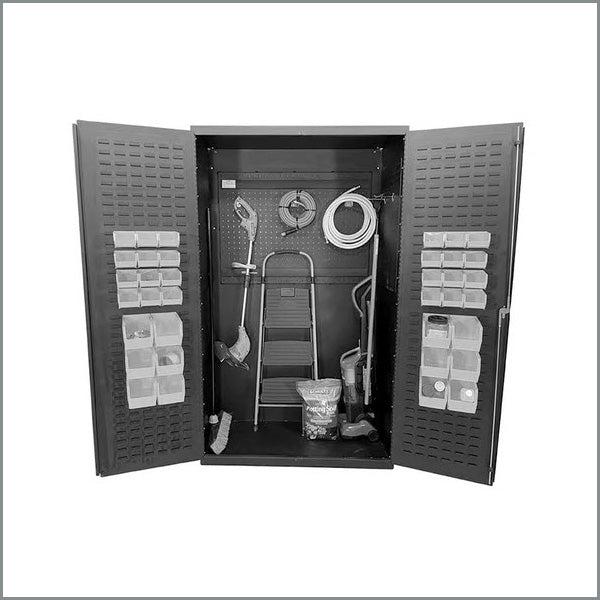
For those who need organized storage for small parts and tools, the Durham Heavy Duty Cabinet with 176 Bins ($4,387.41) provides an excellent solution. This specialized cabinet, measuring 48 x 24 x 72 inches, includes numerous bins for organizing small hardware, making it perfect for DIY enthusiasts and hobbyists. Efficiency studies show that categorized bin storage can reduce the time spent searching for specific items by up to 75% compared to mixed storage methods, making this type of solution particularly valuable for those who work frequently with small components.
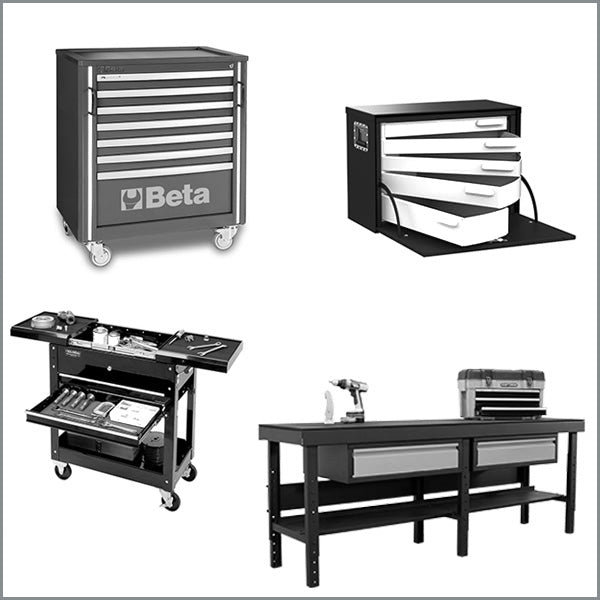
For those who use their garage as a workshop, integrated workbench systems provide an excellent solution. The Valley Craft Cabinet/Workbench Suite B ($2,932) is a versatile and durable storage and work solution that combines overhead cabinets, pegboard backing, and a sturdy work surface. At 4 feet wide, it's designed for efficient workspace utilization while maximizing storage. Ergonomics experts note that properly designed workbenches positioned at the correct height (typically 36-38 inches for most adults) can significantly reduce back strain and increase productivity during DIY projects.
The Valley Craft Cabinet/Workbench Suite D offers a corner configuration to maximize space usage, making it perfect for garages with limited wall space. This 6-piece corner unit provides comprehensive storage while fitting neatly into the corner of your garage. Space planning specialists point out that corner workbench configurations can increase usable workspace by up to 40% compared to straight wall installations in the same square footage, making them particularly valuable in smaller garages.
The most effective garage organization combines multiple storage types: overhead storage for seasonal and bulky items, wall storage for frequently used tools, floor cabinets for heavy or sensitive equipment, and open shelving for items needing quick access. By utilizing each of these storage types in their optimal capacity, you can create a highly functional garage space where everything has its place. Professional organizers recommend the "zone system" for garage planning, where different areas of the garage are dedicated to specific activities (automotive maintenance, gardening, sports equipment, etc.), with appropriate storage solutions tailored to each zone's particular needs.
7. Safety Considerations for Overhead Storage
Safety should be your primary concern when installing any overhead storage system. Proper installation and usage will prevent accidents and protect both your belongings and your family. According to home insurance data, improperly installed overhead storage is among the top causes of garage ceiling collapses, which can result in significant property damage and potential injury.
Always ensure your ceiling can support the weight of both the storage system and the items you plan to store. This means identifying and mounting to ceiling joists, never just to drywall, and using appropriate hardware for your ceiling type. For very heavy systems or if you're uncertain about your ceiling's load capacity, consider consulting a structural engineer. Always follow all manufacturer installation guidelines precisely to ensure safety. Building code experts emphasize that most residential ceiling joists are designed primarily for supporting the ceiling material itself, not for significant additional loads, making proper mounting techniques critically important.
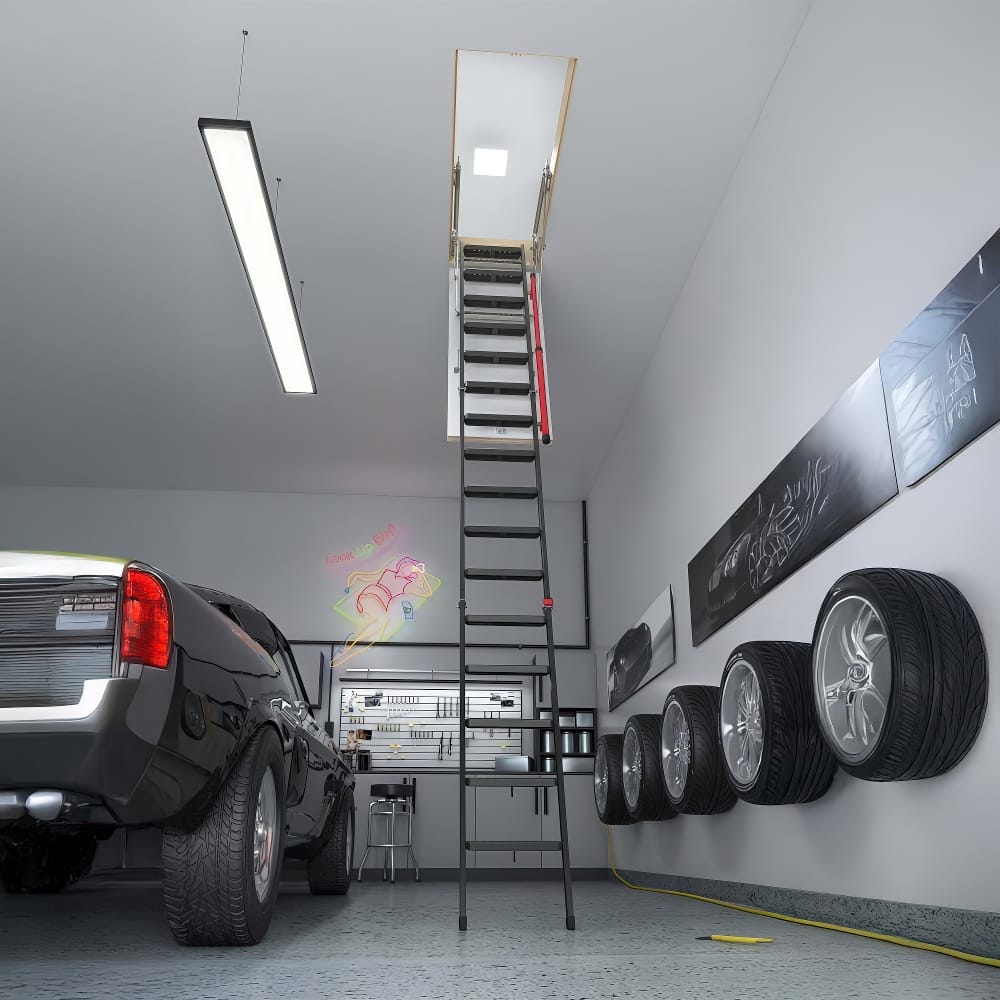
Safe access to your overhead storage is crucial to prevent falls and injuries. Use a sturdy ladder that reaches comfortably to your storage height—never climb on chairs, tables, or other makeshift solutions. Consider systems with built-in access features like the FAKRO LMP Insulated Attic Ladder, which provides secure, stable access to attic storage. Safety statistics indicate that ladder falls are among the most common household accidents, with over 500,000 people treated for ladder-related injuries each year in the United States alone.
For frequently accessed storage, consider motorized systems like the Majic Attic Lift System that eliminate climbing entirely. These systems are particularly valuable for those with mobility issues or when storing heavier items that would be difficult to carry up and down a ladder. Healthcare professionals recommend motorized systems for anyone with back problems, joint issues, or balance concerns, as these conditions significantly increase the risk of injury during ladder use.
Regular maintenance and inspection help ensure continued safe operation. Inspect mounting hardware periodically for signs of stress or loosening, check for any sagging or deformation in the storage platform, verify that motorized components are functioning correctly, and re-tighten connections as needed. A quick monthly visual inspection and a more thorough check every six months can prevent safety issues before they become serious. Engineering analyses of storage system failures show that gradual loosening of hardware over time is a leading cause of eventual collapse, making regular inspection and maintenance essential for long-term safety.
8. Maximizing Your Overhead Storage Space

Once you've selected and installed your overhead storage system, implementing smart organization strategies will help you make the most of this valuable space. Professional organizers estimate that well-planned storage arrangements can increase the effective capacity of your overhead storage by 30-40% compared to haphazard approaches.
Choose storage containers that maximize your overhead space. Clear plastic bins allow you to see contents without accessing them, making it easier to find what you need without having to bring everything down. Uniform container sizes stack more efficiently than mixed sizes, creating a more stable and space-efficient storage arrangement. If your garage experiences temperature fluctuations, consider weatherproof containers to protect sensitive items from damage. Materials scientists recommend polypropylene containers for garage storage as they offer superior resistance to temperature extremes (-20°F to 240°F) compared to other plastics, reducing the risk of cracking or warping over time.
Implement a rotation system for seasonal items to make the most of your storage space. Place winter holiday decorations and summer camping gear on opposite sides of your storage area so you can access each during its relevant season without having to move everything around. Use this rotation as an opportunity to declutter and reorganize, removing items you no longer need and ensuring everything is properly packed and labeled. Organizational psychologists note that implementing a seasonal rotation schedule increases the likelihood of regular decluttering by approximately 60%, preventing accumulation of unused items over time.
Creating a simple map or inventory of what's stored where can save significant time and frustration. Draw a basic diagram of your overhead storage area, assign numbers or zones to different sections, and keep a corresponding list of what's stored in each zone. Update this map whenever you significantly reorganize. This mapping system is particularly valuable for attic storage, where visibility may be limited. Efficiency experts estimate that implementing a storage mapping system can reduce the time spent searching for specific items by up to 80%, particularly for items accessed only a few times per year.
Label all containers clearly on multiple sides for easy identification from below. This simple step can save you from having to bring down multiple containers to find what you're looking for. Consider using a color-coding system for different categories of items (holiday decorations, camping gear, sports equipment, etc.) to make identification even easier at a glance. Cognitive research shows that color-coding improves recognition speed by approximately 30% compared to text-only labeling, making it particularly valuable for quickly identifying containers from a distance or in low-light conditions.
9. Installation Tips for Different Ceiling Types

The installation process varies depending on your garage's ceiling construction. Understanding your ceiling type will help you select the appropriate mounting hardware and techniques for a safe and secure installation. Construction experts emphasize that recognizing your specific ceiling structure is crucial for determining the correct mounting approach, as techniques that work perfectly for one ceiling type may be completely inadequate for another.
If your garage has exposed ceiling joists, direct mounting is simplest—you can attach directly to the sides or bottoms of joists. Measure joist spacing to ensure compatibility with your chosen storage system, as most systems are designed to work with standard joist spacing (typically 16 or 24 inches on center). The ONRAX Ceiling Storage Rack is designed to work with standard joist spacing, making it a versatile option for most garages. Structural engineers note that side-mounting to joists typically provides greater load capacity than bottom-mounting, as it takes advantage of the joist's primary structural strength rather than relying on the fasteners' withdrawal resistance.


