






In 2013, approximately 511,000 people in the United States were injured from ladders. The financial cost of these injuries was a staggering $24 billion, covering work loss, medical, legal, liability, and pain and suffering expenses.
When you are balancing on a narrow rung while hauling a heavy tote, the margin for error is razor-thin, and a single moment of distraction can lead to disaster. One misstep does not just mean a bruise; it can mean months of painful rehabilitation or weeks off the tools, impacting your livelihood.
With the right equipment, you can secure your attic safety and prevent these accidents. By upgrading your equipment and installing proper barriers, you turn a precarious chore into a routine task that ensures secure climbing every time.
1. Select Attic Ladders With Proper Load Capacity
If your current setup creaks loudly every time you step on it or feels like it might give way, it is time for an immediate upgrade. The first step to safety is ensuring your attic stairs can actually handle the job without flexing or bowing under pressure.
Think about what you are really hauling up there because it is never just your body weight on the rungs. You are likely carrying heavy tool totes, large boxes of winter clothes, or cumbersome car parts that shift your center of gravity. You need a significant weight limit buffer, so we generally recommend looking for an attic ladder with a load capacity in the 300 lb to 375 lb range.
Material choice is just as critical for long-term durability and safety. FAKRO attic ladders are an excellent choice, offering sturdy construction, energy efficiency, fire resistance, and a fit for high ceilings, making them ideal for everyday use.
Regardless of the material, look for attic stairs with high R-values to keep your climate-controlled air inside and maintain indoor warmth during colder months. Proper thermal insulation reduces strain on your HVAC system while supporting overall energy efficiency.
If you require industrial strength for a workshop environment, a steel lift frame provides the necessary convenience and durability. These heavy-duty metal options resist warping over time, unlike traditional wooden models that may degrade and rot in humid garages or damp loft spaces.
Always ensure the frame is square and level during installation to prevent stress on the hinges, which enhances the functionality of your system.
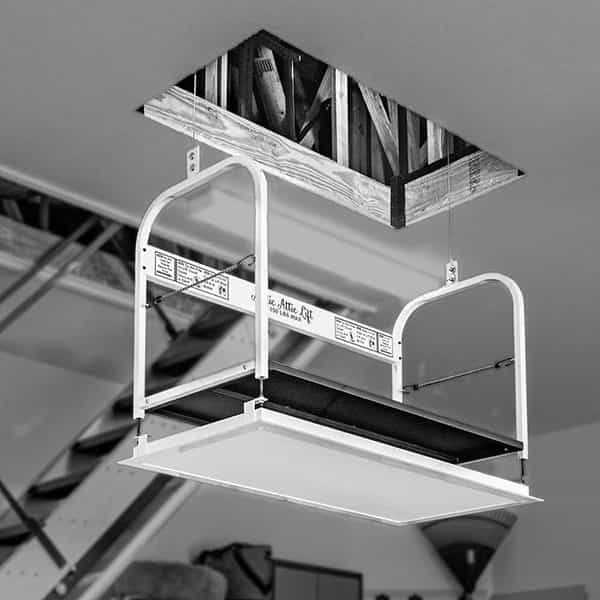
If hauling gear up an attic ladder ruins your knees or back, consider a mechanical assist for convenient access. An attic lift is a push-button solution that lifts the load for you, acting like a personal dumbwaiter for your heavy items. This hands-free operation means you only have to lift yourself up the attic ladder, which significantly reduces fatigue and risk.
|
Warning/Important: When selecting an attic ladder, consider your body weight along with the weight of any tools, materials, and equipment. Exceeding the attic ladder’s weight limit can lead to dangerous bending or failure over time. |
 |
|
2. Install Handrails to Safe Attic Access Ladders
Picture stepping off the attic ladder onto the decking and turning to slide a heavy box back into the corner. That stomach-dropping sensation is the hidden danger at the hatch edge, which exists the entire time you work in the attic room.
Residential codes emphasize protecting floor openings in living spaces, yet most attics leave the dangerous hole wide open. This is especially concerning for homeowners with children who may be curious about exploring attic spaces.
Installing a safety railing on attic stairs is not just about compliance with local regulations; it is about creating a physical barrier that saves lives. This simple addition protects you from a potentially catastrophic 10-foot drop onto the concrete below, providing added safety for homeowners.
We recommend durable systems like the Versa Rail 60 Safety Railing because they address this exact problem without requiring a contractor to build a custom frame. It is manufactured with a three-sided handrail around your exposed attic ladder opening, giving you a sturdy grab bar for entering and exiting the space. This also serves as a bumper for when you are moving boxes around near the opening, preventing accidental slips into the void.
Extra stability comes from contact points, and while a single handrail is good, dual-sided grips are far better for maintaining balance. They offer additional support by allowing you to maintain three points of contact all the way up and into the attic space, which is the golden rule of attic ladder safety.
If you have children or pets, look for attic ladders with metal or aluminum rail systems designed with an optional gate for added safety and extra stability.
|
Spec |
Versa Rail Model 60 Details |
|---|---|
|
Dimensions |
54" to 60" (length) x 22 1/2" to 30" (width) |
|
Material |
Alloy steel |
|
Installation |
Fastens to attic decking with lag screws provided |
|
Compatibility |
Adjusts to fit all common attic ladder opening sizes |
|
Key Insight: Upgrade to attic doors with certified fire resistance ratings to slow the spread of flames between floors for 30-90 minutes. This simple change gives you extra time to respond in case of a fire emergency. |
 |
|
3. Inspect and Clear Areas
You wouldn't drive your truck for ten years without checking the brakes, and your attic access ladder safety equipment needs love, too. In 2020 alone, ladders were responsible for 161 workplace fatalities and 22,710 workplace injuries. Without regular maintenance, rust, loose bolts, and sudden mechanical failure can turn a routine task into a serious accident.
Perform regular inspections of the attic ladder by tightening hinge bolts, as vibration from regular use loosens nuts over time. Check spring tension to ensure the door does not slam shut violently or fall open too fast, striking anyone below.
Additionally, inspect the non-slip treads for hairline cracks in wood or bends in aluminum steps to prevent unexpected breakage under load.
Use a shop-vac to clean dust and debris around the attic opening, and wear a respirator to protect yourself from dust. A quick vacuuming around the attic access opening ensures your footing is secure and comfortable when you transition off the attic ladder.
|
Pro Tip: Safety starts on the ground. Store seasonal thermal insulation materials away from the attic ladder hatch to avoid obstructing movement. Clear pathways prevent entanglement and tripping accidents. |
Enjoy Convenient Access with Attic Stairs
Attic ladder safety is not about excessive caution; it is about using the right tool for the job to ensure easy access. By selecting equipment that handles your actual weight, installing handrails, and placing mats with non-slip treads, you eliminate the variables that cause falls.
Take the time to evaluate your current setup and make the necessary upgrades today to ensure your family is safe. Then check out our wide range of attic ladders that are durable and easy to operate. A few simple changes can secure your overhead storage and keep you safe for years to come.


