





The most expensive square footage in your home is often sitting empty—right above your hood. Most garages waste more than 100 cubic feet of ceiling storage, and a properly planned overhead system can reclaim approximately 105 cubic feet per unit while keeping your floor clear for parking, projects, and everyday use.
In this combined guide, we’ll show you what the best overhead garage storage actually looks like in 2026 by comparing the 7 most practical system types—stationary racks, motorized platform lifts, universal lifters, adjustable racks, heavy-duty adjustable racks, attic lifts, and hybrid layouts—and how they work together with cabinets, wall storage, and (sometimes) an outdoor shed.
Key Takeaways: What’s “Best” Depends on Access + Safety + What You Store
| Common Question | Quick Answer |
|---|---|
| What is the best overhead garage storage for most homes? | A hybrid plan: one heavy-duty stationary rack for deep storage + one motorized lift for anything heavy or accessed often. |
| What is the safest overhead storage for frequent access? | Motorized platform lifts—because the platform lowers to you (reducing ladder time and increasing safety during loading). |
| What’s best for bikes, kayaks, cargo boxes, and odd shapes? | A universal lifter/hoist—compact, flexible, and designed for awkward gear. |
| Are adjustable racks better than fixed-height racks? | Yes when clearance is tight (low ceilings, tall vehicles, garage door/opener conflicts) because you can fine-tune the drop. |
| When does an attic lift beat ceiling racks? | When the attic above the garage is the real storage zone—an attic lift can unlock more net capacity than multiple ceiling racks. |
| Can overhead storage replace cabinets and shelving? | Not fully. Overhead is best for bulk/seasonal volume; cabinets and wall systems are best for daily-use, smaller items, and anything that should be locked or contained. |
| When is an outdoor shed better than overhead storage? | When you’re dealing with messy, heavy, or unsafe-to-lift items (yard machines, fuels, certain chemicals). |
How to Choose the Best Overhead Garage Storage for Your Space
Choosing the best overhead garage storage starts with three reality checks: what you store, how often you touch it, and how safe you want access to be. Most homeowners benefit from combining a ceiling rack or lift with good wall storage and, sometimes, outdoor space.
- Stationary racks: best for maximum capacity and low cost per square foot.
- Motorized platform lifts: best for safety + convenience when you need frequent access.
- Universal lifters: best for odd-shaped equipment like kayaks or cargo boxes.
- Attic lifts: best for homes where the attic is the primary storage zone.
If you want a simple rule that prevents regret: anything heavy or accessed regularly should not require a ladder. That’s where motorized lifts and universal lifters change the game.
7 Smart Overhead Garage Storage Systems Compared
1) Stationary Overhead Garage Racks (Best “Baseline” Storage)
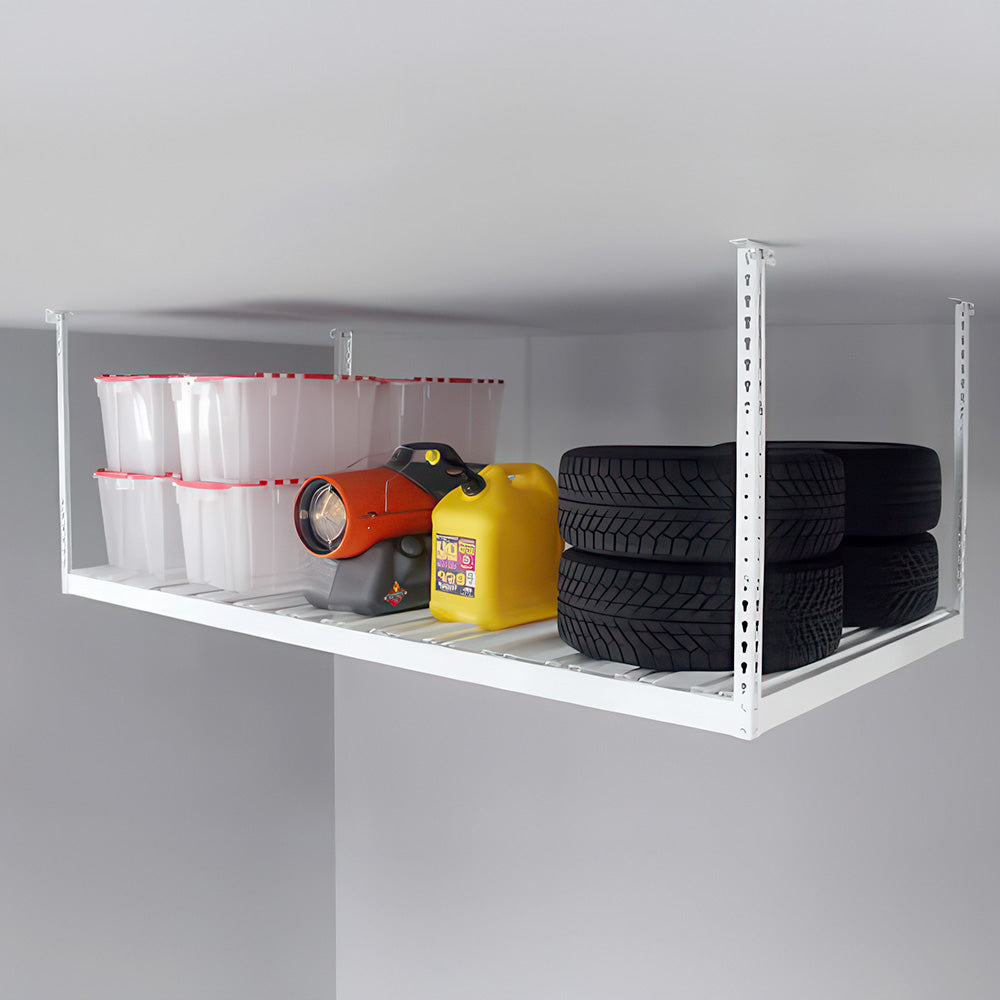
Fixed ceiling racks are the simplest overhead solution, and they set the benchmark for capacity and cost. A properly installed 4 x 8 ceiling rack typically provides roughly 105 cubic feet of usable space and can handle several hundred pounds of evenly distributed weight.
Example: ONRAX Ceiling Storage Rack — a professional-grade fixed rack that uses a 14-gauge steel C-channel box frame and Enduro Deck panels for a solid platform feel; on select models, ONRAX rates capacity up to 800 lb, with pricing shown around $420 (discounted from $490 in the referenced data).
- Best for: seasonal totes, camping tubs, archive boxes, “deep storage” you don’t touch every week.
- Tradeoff: ladder access—so it’s rarely the best choice for heavy items you’ll move often.
2) Motorized Platform Lifts (Best Overhead Garage Storage for Heavy + Frequent Access)
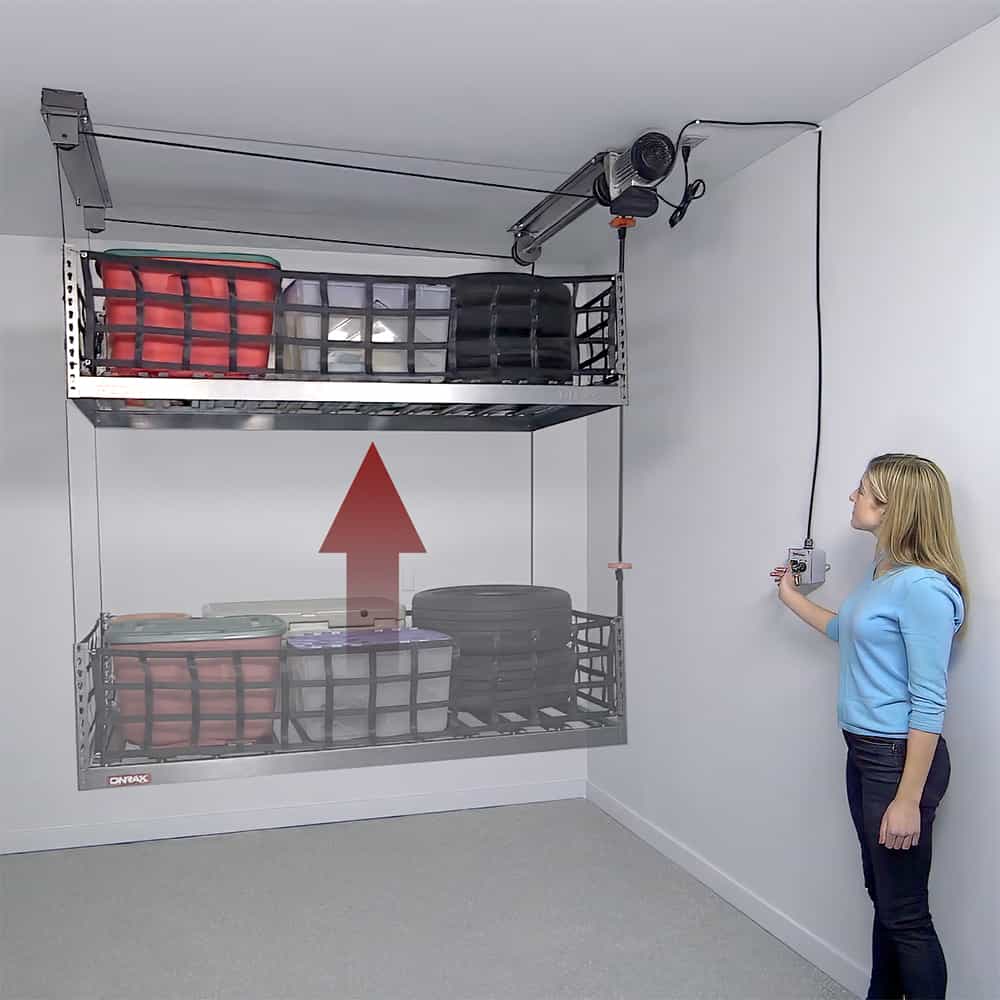
Motorized platform lifts solve the biggest drawback of fixed racks: climbing. You lower the platform to chest height, load it, then raise it back to the ceiling with a button or remote.
Example: ONRAX Ascension Garage Storage Lift — a remote-controlled motorized overhead platform designed for high ceilings and bulky items, shipping with mounting hardware and guidance for safe structural tie-in.
- Best for: heavy bins, coolers, seasonal sporting gear—especially if you want to reduce ladder use.
- Tradeoff: higher upfront cost + more complex install (power + careful mounting).
3) Universal Lifters and Hoists (Best for Bikes, Kayaks, Cargo Boxes)
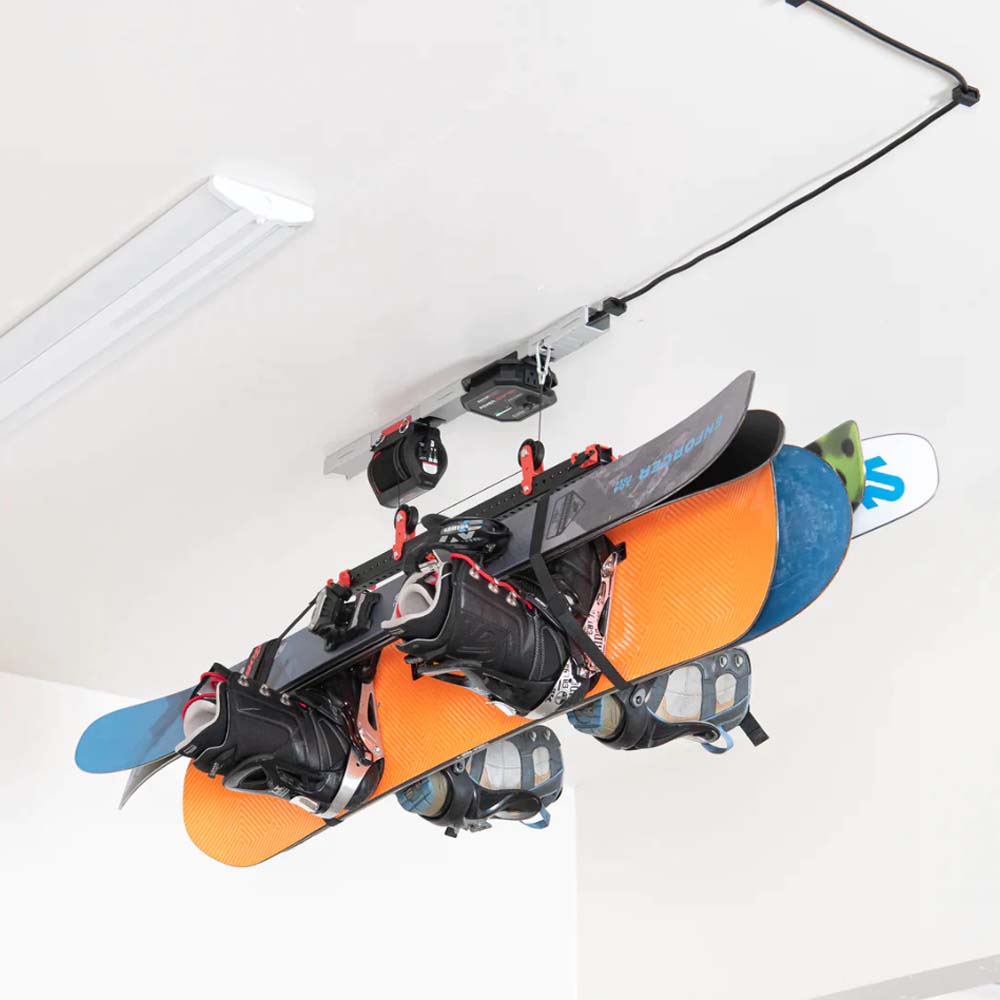
Universal lifters are compact motorized systems that lift straps, a small frame, or hooks instead of a full-size platform. They shine when you have items that won’t sit neatly on a rack—bicycles, kayaks, cargo boxes, or other awkward gear.
Example: SmarterHome Universal Lifter — shown around $545 in the referenced data, with a typical frame length of about 27 inches and a rated capacity of 100 pounds (great for gear, not for “all the bins”).
- Best for: families with changing sports gear, multiple bikes, roof boxes that come down several times per season.
- Tradeoff: lower capacity than full platforms and racks—more “targeted solution” than bulk storage.
4) Adjustable Overhead Racks (Best for Tight Clearance and Mixed Use)

Adjustable overhead systems are ideal when clearance is tight—low ceilings, tall vehicles, or conflicts with garage door tracks and openers—because you can position storage exactly where it fits without sacrificing usable space. Instead of forcing a fixed rack height, you build in flexibility so your overhead storage can adapt as your garage changes.
Example: Top Shelf Storage Lift 400 — a motorized overhead storage lift that lowers your load to a convenient height and raises it back up with a remote. It’s a strong “mixed-use” solution for bins, bulky seasonal items, and heavier gear because it improves access without relying on a ladder every time you need something.
- Best for: garages where a fixed rack height would interfere with door tracks, openers, lighting, or tall vehicles—and for households that want safer, easier access to heavier overhead storage.
- Tradeoff: higher upfront cost than a standard adjustable rack, and installation is more involved because it’s a powered lift system that must be mounted securely.
5) Heavy-Duty Adjustable Racks (Best for Finished-Garage Looks)
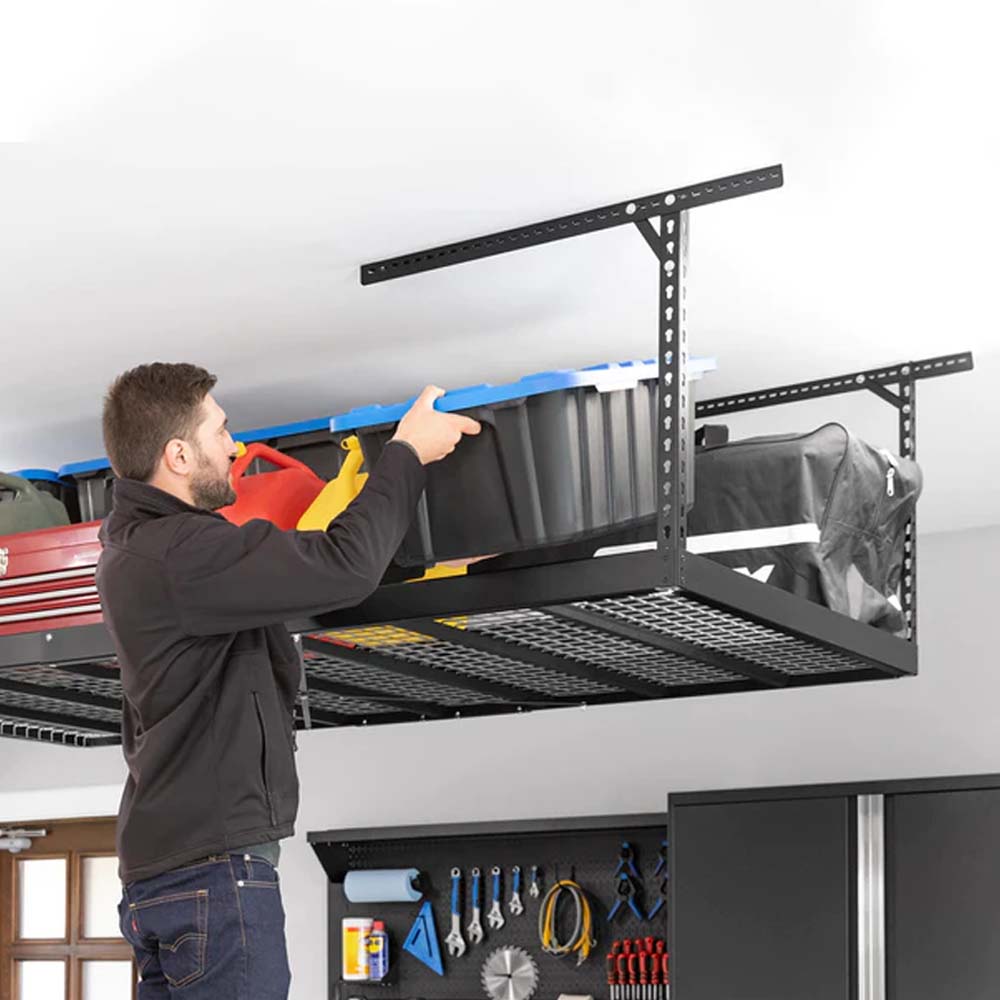
Some homeowners want overhead storage that works hard and matches a finished garage aesthetic. Pro-grade adjustable racks with premium finishes fill that lane.
Example: NewAge Versarac Pro 4 ft x 8 ft — a height-adjustable overhead rack with a black powder-coated finish designed for versatile storage in home and light commercial garages.
- Best for: showroom-style garages where you want overhead storage to visually “match” cabinets, flooring, and wall systems.
- Tradeoff: higher price than standard adjustable racks; still not powered, so ladders remain part of use.
6) Attic Lifts (Best When Storage Lives Above the Ceiling)
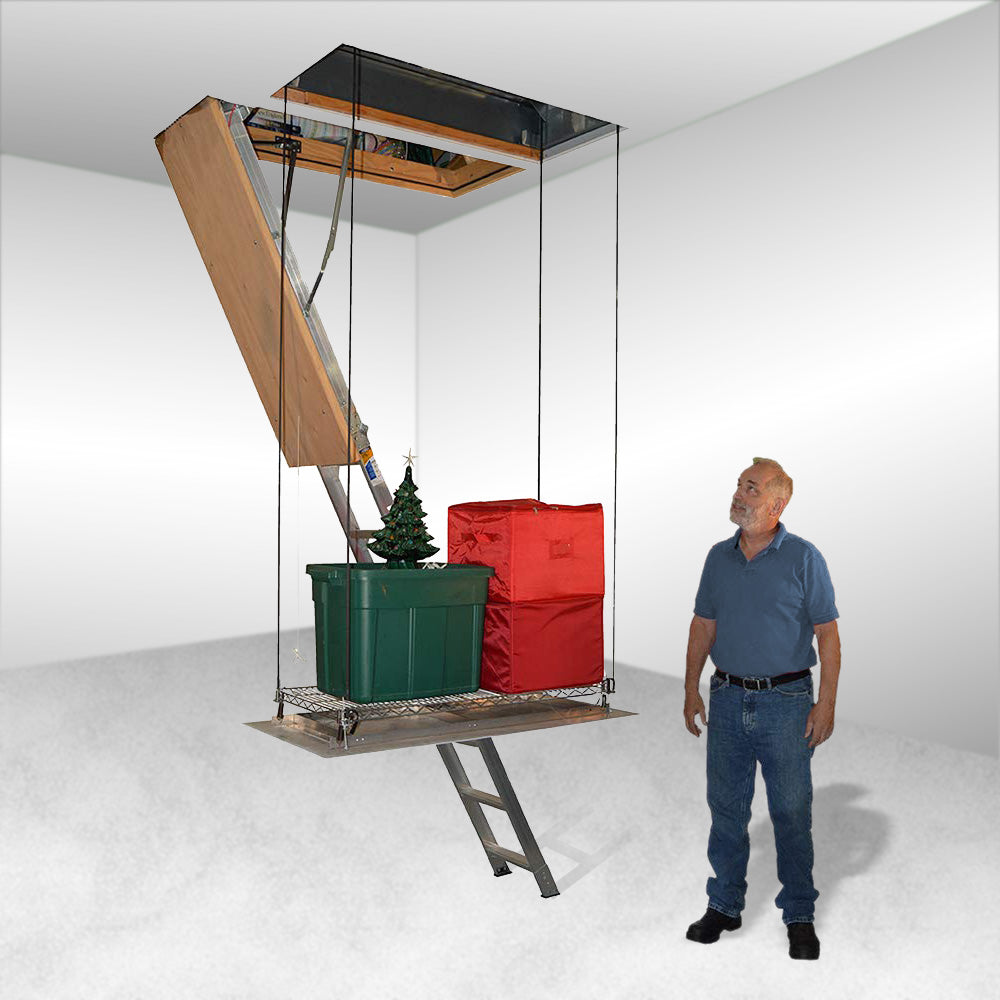
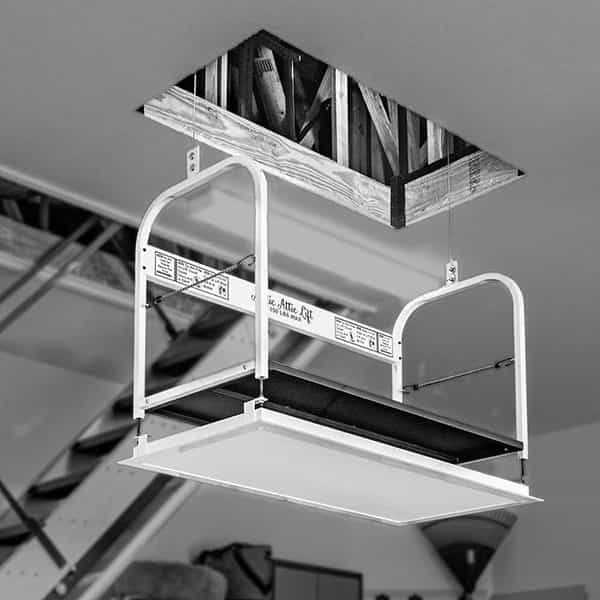
Attic lifts are built for homes where the “real” storage space is above the garage ceiling. Instead of trying to cram everything onto ceiling racks, a motorized attic lift moves bulky items up through a framed opening—turning your attic into a usable storage zone without the strain and risk of hauling bins up a ladder.
Example: SpaceLift Attic Storage Lift — a motorized attic lift system designed to raise and lower storage safely with minimal physical effort. Inventive Garage lists it with a 200 lb weight capacity and a platform sized to fit most standard attic openings, making it a practical option for seasonal bins, tools, and bulky household items.
- Best for: households that store seasonal décor, archive bins, bulky totes, or tools in the attic above the garage—and want safer, easier loading from the garage floor instead of ladder carry-ups.
- Tradeoff: requires a framed ceiling opening and secure structural mounting, so installation is more involved than standard ceiling racks (and planning platform size/headroom matters).
7) Hybrid Layouts (Best Real-World Answer for Most Garages)
There is no single best overhead garage storage product for every situation. In practice, the best setups mix systems: a stationary rack for deep storage, a motorized platform lift for heavy/frequent items, and universal lifters for awkward gear—then pair that overhead volume with safe, easy-access storage at eye level.
A simple way to build a “works forever” layout is to map storage into zones:
- Knee-to-shoulder height (daily use): tools, supplies, car care, sports gear that comes out weekly.
- Overhead (bulk + seasonal): sealed totes, camping gear, luggage, seasonal bins, long-term items.
- Specialty overhead (awkward shapes): bikes, kayaks, cargo boxes on universal lifters.
- Outside (messy/heavy/unsafe to lift): fuels, certain chemicals, large yard machines.
Overhead Storage Works Best When You Pair It With Cabinets and Wall Systems

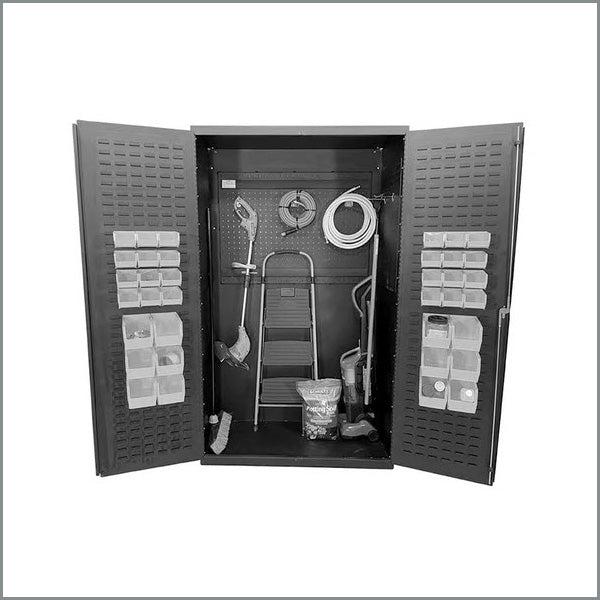
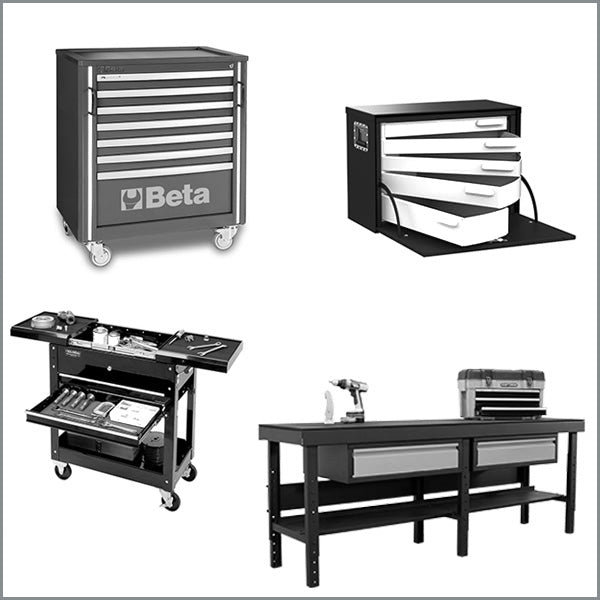
Even when overhead is the star, the best garages combine ceiling storage with cabinets, drawers, and wall panels. Overhead holds volume, while cabinets and walls handle tools, chemicals, and anything you want locked and labeled.
This is where the whole garage starts to feel intentional: overhead racks and lifts eliminate clutter, while cabinets and wall storage make the space fast to use. If your goal is a garage that stays clean, the “secret” is not buying one giant rack—it’s assigning every category of item a safe zone and making access frictionless.
Final Word: The Best Overhead Garage Storage Is the One You’ll Use Safely
The best overhead garage storage in 2026 isn’t just the strongest rack or the fanciest lift—it’s the system (or combination of systems) that lets you store more without risking your back, your car, or your patience every time you need something. Start by claiming that wasted ceiling volume, then build a hybrid plan: racks for deep storage, motorized lifting for heavy access, universal lifters for awkward gear, and strong wall/cabinet storage for everything you touch often. Done right, overhead storage becomes the safest, cleanest square footage you own—and the garage finally starts working like a real room again.


