





A good attic ladder can turn an unused ceiling opening into practical storage space without taking over your garage, hallway, or utility room. The key is choosing a ladder that fits your rough opening, clears the space below, and feels easy to use every time you need safe access.
For small spaces, electric, folding, and scissor-style attic stairs are especially useful because they tuck away cleanly and reduce the hassle of setup.
Below, we compare Inventive Garage’s best pull-down attic ladder options, including models for ceiling heights from 7 ft. 5 inches to 16 ft. and load ratings from 350 to 500 lb.
eLAIR One-Touch Electric Attic Stairway
The eLAIR One-Touch Electric Attic Stairway is a strong choice for garages, workshops, and utility areas where attic access is used regularly. It fits rough opening widths of 22.5 inches, 25.5 inches, and 30 inches, with lengths from 54 inches to 65 inches.
This unit also works with ceiling heights from 8 ft. to 16 ft., making it one of the best options for taller spaces.

Specifications:
- Supports up to 500 lb lifting capacity
- Has a 16' ceiling height
- Nonslip stair 4" deep treads
- Automated operation
- Safety sensor
Pros:
- The automated operation reduces physical strain as there is no need to lift, pull, or unfold a heavy ladder.
- The retractable electric system lowers straight down, making it easier to use in tight spaces.
- It operates quietly, reducing noise and disturbance.
- This unit is available in multiple sizes and ceiling height ranges with customizable options to fit unique architectural needs.
Cons:
- Requires electrical power and proper installation.
For homeowners who use their attic often or need access above a high ceiling, the eLAIR offers the most heavy-duty setup in this group.
Best For: Tall ceilings, frequent attic access, and heavier storage loads.
FAKRO LET Electric Motorized Retractable Attic Ladder
The FAKRO LET is designed for areas with limited floor clearance. Its scissor-style mechanism folds compactly into the ceiling, so it does not swing out as far as a traditional folding attic ladder.

Specifications:
- Motorized open/close with Z-Wave control kit + standard wall switch
- R-12.5 insulated hatch helps reduce draft/heat loss at the attic access point
- Triple perimeter sealing (three seals) to help limit air leakage
- 350 lb maximum loading capacity for safe storage access
Pros:
- The 350 lb rating + anti-slip treads make it safer to climb with storage bins.
- Its motorized open/close makes frequent attic runs feel effortless.
- This unit's insulation thickness reduces that “leaky hatch feel” and improves comfort below.
Cons:
- Ceiling height range tops out at 9 ft. 6 inches, so it's best matched to standard-height rooms rather than very tall ceilings.
This model’s R-12.5 insulated hatch and triple-seal perimeter make it a strong option for finished hallways, living areas, and climate-controlled garages where drafts and heat loss matter.
If you need a compact electric attic ladder with strong sealing and a clean ceiling profile, the FAKRO LET is the most space-efficient choice.
Best For: Finished spaces, smaller landing areas, and energy-conscious homes.
Rainbow Galaxy II Electric Attic Stairway
The Rainbow Galaxy II is a practical electric attic stairway for homes with common rough opening sizes. It is available in 22.5 x 54 inches, 25.5 x 54 inches, and 30 x 60 inches configurations, and it works with ceiling heights from 7 ft. 6 inches to 10 ft.

Specifications:
- 350 lb. weight capacity
- Adjustable height range from 7'6" to 10'
- Remote-controlled operation with manual override
- Dual steel telescoping handrails
Pros:
- Fits ceilings from 7'6" to 10', unlike fixed-length options.
- The dual handrails provide extra stability, and are missing in most attic ladders.
- It supports remote-controlled operation, so no manual effort is needed, unlike traditional pull-down ladders.
Cons:
- The motorized design is a bit more involved to install than a manual pull-down ladder.
For homeowners who want an electric attic ladder without a complicated setup, the Rainbow Galaxy II is a dependable choice for standard residential spaces.
Best For: Standard ceiling openings and everyday residential attic access.
What Makes the Best Pull-Down Attic Stairs for Small Spaces?
A compact attic ladder needs to do more than fit the opening. It also has to match your ceiling height, support the right load, clear the floor space below, and feel safe to use.
Before choosing a model, confirm these basics:
- Rough opening size, including both width and length.
- Finished floor-to-attic-floor ceiling height.
- Load capacity for the user plus anything being carried.
- Available landing space below the attic ladder.
- Preferred operation style: manual, electric telescoping, or scissor-style.
Once those measurements are clear, it becomes much easier to narrow the options. Here are factors to consider:
Compact Opening Size
The rough opening is usually the first limiting factor. If the attic stairways do not fit the framed cutout, the rest of the specs do not matter.
Many compact attic ladders start around 22.5 inches wide, which works for many standard ceiling openings. For especially tight layouts, a scissor-style ladder can be a better fit because it folds more compactly and requires less swing space below the hatch.
Always measure both the width and length of the opening. Also check the landing area underneath the attic stairs, especially in hallways, utility rooms, or garages where doors, shelving, or parked vehicles can limit clearance.
Once the opening size is confirmed, the next key measurement is ceiling height.
Ceiling Height Compatibility
Ceiling height quickly narrows your attic stairways options. Each model is designed to deploy at a safe angle within a specific height range.
For ceilings under about 10 ft., you will usually have several options. At taller heights, especially above 10 ft., the eLAIR becomes the better fit because of its extended reach.
Measure from the finished floor to the ceiling drywall, not just to the bottom of the ceiling joists. That measurement determines whether the ladder will sit at a safe, comfortable climbing angle.
|
Key Insight: Measuring ceiling height vertically from finished floor to ceiling drywall, not joist bottom, ensures the ladder deploys at a safe, usable angle. A mis‑measurement of even a few inches can compromise stability. |
Weight Capacity and Stability

Load rating matters because it includes more than body weight. You also need to account for anything carried up or down the attic ladder.
For example, a 180-lb person carrying an 80-lb storage bin creates a 260-lb load before adding tools, hardware, or other gear. Choosing a ladder with a comfortable safety margin makes attic access feel more secure.
The FAKRO LET and Rainbow Galaxy II are rated for 350 lb, which is suitable for most household storage tasks. The eLAIR offers a higher 500 lb rating, making it a stronger choice for frequent use, heavier items, or taller installations where extra confidence matters.
Stability features also make a difference. Anti-slip treads, secure hinges, and sturdy handrails can make climbing safer, especially when carrying bulky bins.
|
Warning/Important: Load rating reflects the ladder's structural capacity, not the attic floor's. Distribute heavy loads near the perimeter to avoid stressing mid‑span joists, and always account for combined body‑plus‑cargo weight. |
Material: Aluminum, Wood, or Steel Attic Ladders
Material affects weight, durability, appearance, and how the attic ladder feels underfoot. Aluminum is lightweight, corrosion-resistant, and well-suited for utility spaces.
Steel offers a strong, rigid feel and is often used in scissor-style or heavy-duty ladder designs. Wood ladders can provide a warmer appearance, especially near finished living spaces.
Manual options are also available for homeowners who do not need motorized operation. These include wood, metal, fire-rated, and thermal scissor attic ladders, depending on the space and performance needs.
The right material usually comes down to where the attic ladder is installed. A garage may benefit from aluminum or steel, while a hallway or finished room may call for a cleaner insulated hatch and a more refined appearance.
Each material offers distinct advantages depending on your installation location and priorities:
|
Material |
Best Feature |
Ideal Location |
|
Steel |
Maximum strength & rigidity |
Garages |
|
Aluminum |
Lightweight & rust-resistant |
Outdoor access |
|
Wood |
Warm appearance |
Finished living spaces |
Find the Best Pull-Down Attic Stairs for Your Space
Choosing the right pull-down attic ladder starts with accurate measurements. Once you know your rough opening, ceiling height, landing space, and load needs, it becomes much easier to choose a model that fits your home and feels comfortable to use.
Explore our full collection of attic stairs to compare electric, manual, folding, and scissor-style options.
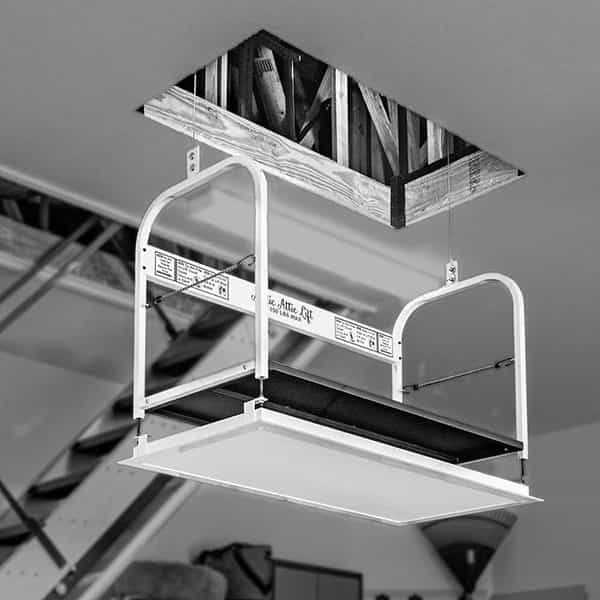
For larger or heavier items, an attic ladder may not be the best solution on its own. Wide storage bins, equipment, and bulky seasonal items are often easier to move with a lift system.
In that case, browse the custom-built attic lift collection for a safer, more convenient way to move heavy loads into overhead storage.
With the right attic ladder, or the right ladder and lift combination, you can make attic access easier and safer in your small space.


